


How to Get Leads From Social Media: A Beginner's Guide
Most people start on social media the same way: post something, wait, feel a little let down, and post again. But your potential customers are already spending a significant amount of time on these platforms. DataReportal's Digital 2026 report estimates 5.66 billion active social media user identities worldwide, equivalent to 68.7% of the global population. The catch is that being present isn't the same as being chosen. If you're new to this and wondering how to turn followers into enquiries, the key is to build a system rather than rely on a viral post.
What "Getting Leads From Social Media" Actually Means
A lead is someone who shows real interest and hands you a way to contact them or start a conversation. Not like. Not a follow. The basic system usually includes:
- A clear offer that solves one specific problem
- Content that attracts people who have that problem
- A simple next step, like a form, DM, or call
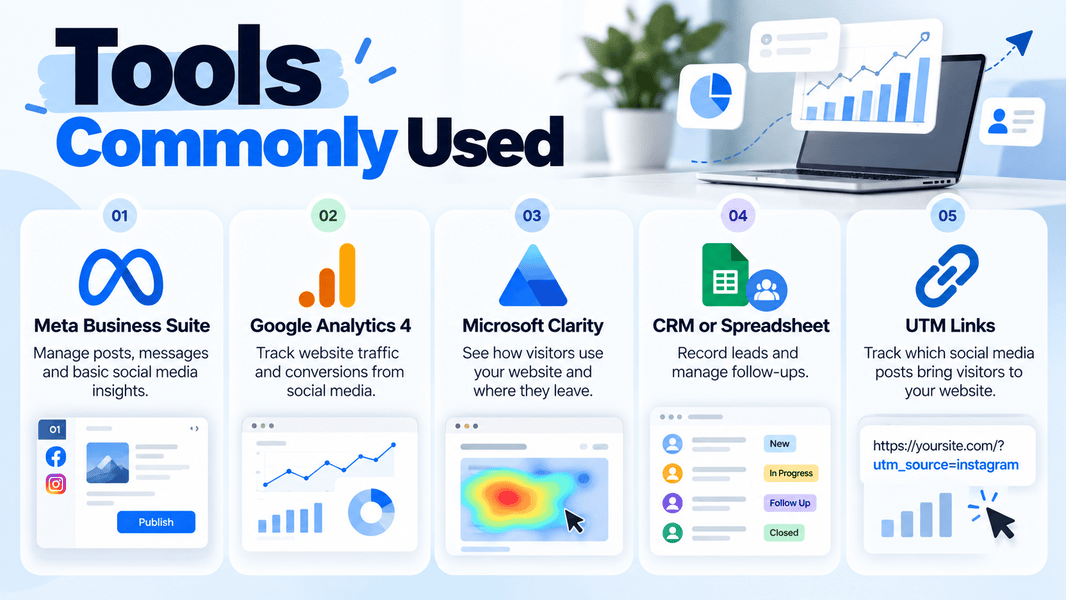
- A way to track where each enquiry came from
- A follow-up routine so no one slips away
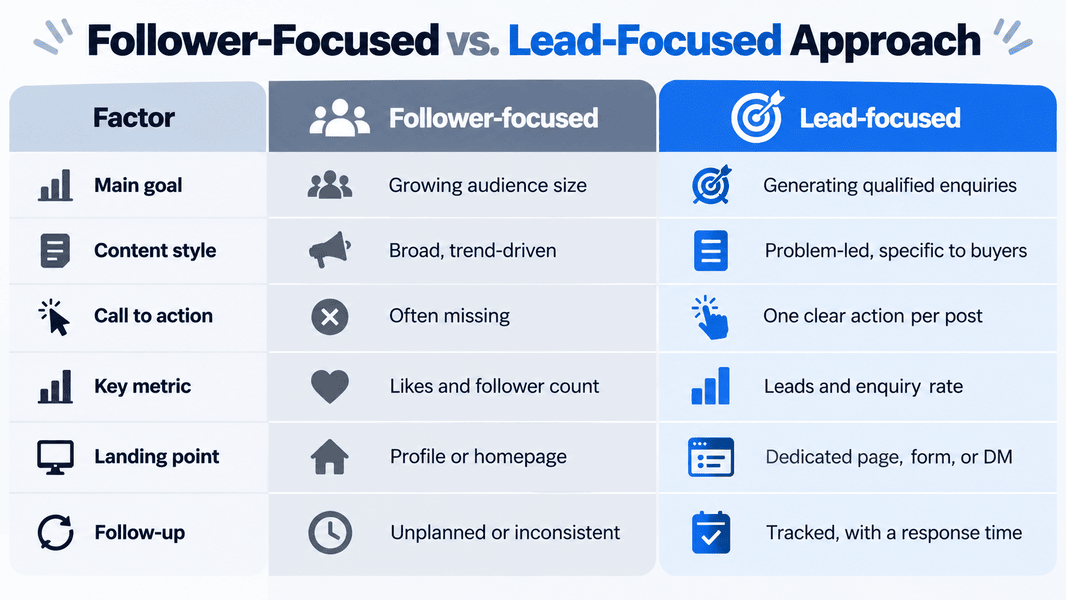
Why Businesses Should Focus on Leads, Not Just Followers
Beginners often chase followers first. The ones who go after leads instead tend to see:
- Enquiries from people who already understand the offer
- Lower spending, since effort goes toward buyers, not audiences
- Clearer reporting, so decisions rest on data, not guesswork
- Steadier growth that doesn't hinge on one post going well
Start With One Platform and One Offer
Beginners spread themselves thin. Pick the single platform where your buyers already spend time. B2B services often do well on LinkedIn, local businesses on Instagram or Facebook, and visual products on Pinterest or Instagram.
- Choose one main offer to promote for the first 30 days
- Write down who it's for in one sentence
- Set up a business profile, not a personal one
- Put your enquiry route in the bio in plain words
- Save the other platforms for later
Mittal Technologies Insight: If you can't describe your ideal customer in one sentence, your content will drift. Fix that before you fix your posting schedule.
Create Content That Attracts Buyers, Not Just Viewers
Good lead content answers questions people ask before they buy. Think price, timing, comparisons, and common mistakes.
- Answer one real customer question per post
- Share short before-and-after results, with permission
- Show the process behind your work
- Address objections directly, like cost or trust
- End each post with a single call to action
When to Bring in a Social Media Marketing Agency for Small Business
You don't need outside help on day one. But a social media marketing agency for small business becomes worth considering when you've posted consistently for a few months and still can't tell what's producing enquiries. Time is often the real constraint, not skill.
- You can't trace leads back to specific posts
- Posts, ads, and website messaging don't match
- Nobody owns lead follow-up
- Testing keeps getting pushed aside
Where a Social Media Ads Agency Fits In
Organic reach is slow and unpredictable. Paid campaigns speed things up, but only if the basics are ready. A social media ads agency will typically check a few things before spending anything:
- Whether the campaign objective is set to leads, not traffic
- Audience targeting and exclusions
- Creative matched to how ready the buyer is
- Lead form versus landing page performance
- Conversion tracking accuracy
Mittal Technologies Insight: Ads make a working funnel bigger and a broken one more expensive. Get a handful of organic leads first so you know what message works.
A Simple Process for Your First 30 Days
- Choose one platform, one offer, and one audience.
- Optimize your profile with a clear bio and enquiry link.
- Plan 12 posts around real customer questions.
- Build a simple landing page or enquiry form for your offer.
- Add UTM links so every lead can be traced.
- Reply to enquiries within an hour and log outcomes.
- Review results weekly and drop what doesn't work.
Common Challenges in Social Media Lead Generation
- Slow results: leads from social media can take weeks. Best Practice: judge progress over 60 to 90 days, watching DMs and clicks along the way.
- Attribution gaps: people see a post, then search for you later. Best Practice: add "how did you hear about us" to every form.
- Wrong audience: popular content can attract the wrong crowd. Best Practice: create content that filters for buyers, even if reach is smaller.
- Slow follow-up: leads go cold quickly. Best Practice: assign an owner and a response time to every enquiry.
- Inconsistency: bursts followed by silence hurt momentum. Best Practice: commit to a lighter schedule you can keep.
And honestly, no strategy rescues a weak offer. If pricing or positioning is off, social media will only expose that faster.
What's Likely Coming Next
- More in-app lead forms and shoppable formats
- Social platforms increasingly acting like search engines
- Tighter privacy rules raising the value of first-party data
- Short video staying dominant, with lead-focused formats improving
- AI-assisted targeting reducing manual campaign setup
Wrapping Up
Getting leads from social media isn't about posting more. It's about a clear offer, a simple path, and steady follow-up. If you'd like help setting that up properly, talk to our team and we'll help you map out a starting plan.
FAQs
1. How do I get leads from social media as a beginner?
Choose one platform and one offer, create content around real customer questions, add a clear call to action, and track every inquiry from post to conversation.
2. Which social media platform works for lead generation?
It depends on where your buyers spend time. LinkedIn suits B2B services, while Instagram and Facebook often suit local and consumer businesses.
3. How long does it take to get leads from social media?
Often two to three months of consistent effort, though timing varies by industry, offer, and budget.
4. Do I need to run paid ads to get leads?
No. Organic content can produce leads, but ads speed things up once you know your message works.
5. When should I hire outside help?
When you've covered the basics and results stall. A marketing agency for small business can supply the tracking, testing, and strategy time that owners rarely have.